
Sea Oil Public Company Limited places the highest priority on the health, safety, and well-being of its employees, contractors, business partners, customers, and all stakeholder groups. The Company is committed to conducting its business in accordance with its Quality, Security, Safety, Occupational Health, and Environmental Policy to prevent work-related injuries and illnesses, accidents, property damage, and adverse impacts on communities and the environment.
The Company is committed to complying with applicable laws, regulations, international standards, and relevant best practices, while fostering a strong safety culture across all levels of the organization. Through continuous improvement and proactive risk management, the Company strives to provide a safe workplace and advance toward a Zero Accident Culture.
Targets and Performance
Targets
- Zero work-related accidents (Zero Accident).
- Implement at least two community projects promoting safety awareness and anti-drug initiatives.
Performance in 2025
- Zero work-related accidents (Zero Accident).
- Implemented four community projects promoting safety awareness and anti-drug initiatives.
The Company has assigned the Quality, Security, Safety, Health and Environment (QSSHE) Department to oversee and manage risks related to quality, security, safety, occupational health, and environmental matters across all business operations. In addition, the Company has established Occupational Safety, Health and Working Environment Committees at each operational site, as well as Emergency Preparedness and Response Teams, to oversee, support, and promote the effective implementation of occupational health, safety, and environmental management throughout the organization.
Quality, Security, Safety, Health and Environment (QSSHE) Department
The Quality, Security, Safety, Health and Environment (QSSHE) Department serves as the primary function responsible for managing and controlling risks related to quality, security, safety, occupational health, and environmental matters. Its key responsibilities include:
- Developing and regularly reviewing QSSHE policies, standards, manuals, and operating procedures to ensure compliance with applicable laws, regulations, and relevant international standards.
- Identifying, assessing, and managing risks that may affect employees, assets, the environment, and business operations, while establishing appropriate preventive and control measures.
- Developing, maintaining, and testing emergency preparedness and response plans, including conducting regular emergency drills and exercises.
- Promoting safety awareness, knowledge, and a strong safety culture through training programs and awareness campaigns.
- Monitoring and evaluating QSSHE performance through relevant key performance indicators (KPIs) and reporting results to management and relevant committees.
Occupational Safety, Health and Working Environment Committee
The Company has established Occupational Safety, Health and Working Environment Committees in accordance with legal requirements to promote collaboration between management and employees in occupational health and safety management. The committees are responsible for recommending safety measures, monitoring performance, inspecting workplace conditions, and participating in the development of preventive measures to reduce workplace accidents and occupational illnesses.
Emergency Preparedness and Response Working Team
The Company has established Emergency Preparedness and Response Teams responsible for planning, preventing, and responding to potential emergency situations arising from business operations, including fires, chemical spills, accidents, and security-related incidents. Emergency response plans are regularly tested, reviewed, and updated to ensure the Company can respond effectively and promptly to emergency situations.
Sea Oil Public Company Limited and its subsidiaries (the "Company") recognize the importance of managing quality, safety, occupational health, and environmental matters in accordance with internationally recognized standards. The Company promotes awareness and accountability among employees at all levels regarding compliance with relevant standards and requirements, while taking into consideration the impacts of its operations on stakeholders, communities, and society. Through the continuous improvement of its Quality, Safety, Occupational Health and Environmental Management System, the Company aims to support sustainable business growth.
The Company's Quality, Safety, Occupational Health and Environmental Policy applies to all operational areas and covers both its Oil Trading business and Catering Services and Provision Supply business. The Company is committed to the following practices:
- Conduct business in compliance with applicable laws, regulations, and requirements relating to quality, safety, occupational health, and environmental management. All employees are required to strictly adhere to relevant laws, policies, standards, procedures, and operational guidelines.
- Continuously improve and enhance quality standards, operational performance, and service excellence across all business functions in response to evolving regulatory requirements, international standards, and technological innovations. The Company is committed to delivering products and services that provide value through quality, safety, timely delivery, and professional service in order to meet customer expectations and satisfaction.
- Promote training and competency development programs to strengthen employees' capabilities and cultivate awareness of quality, safety, occupational health, environmental stewardship, social responsibility, and the efficient use of natural resources.
- Implement systematic risk management processes covering quality, safety, occupational health, and environmental matters. The Company provides knowledge, guidance, and support to stakeholders to prevent losses arising from accidents, occupational illnesses, and unforeseen incidents associated with business operations. Employees and contractors are empowered to exercise their right to stop work under unsafe conditions. The Company also manages environmental risks that may affect people, property, communities, and the environment, and maintains emergency preparedness and crisis management plans supported by adequate resources.
- Establish transportation safety measures to ensure the safe delivery of products, protect lives and property, and prevent potential risks or incidents that may adversely affect communities and the environment.
- Promote safe, healthy, and suitable working conditions for employees and stakeholders throughout the supply chain. The Company supports fair employment practices and safe working environments to protect individuals from harm to life, physical health, mental well-being, and occupational safety. The Company is committed to protecting employee welfare, fostering mutual respect, treating suppliers and stakeholders fairly and equitably, prohibiting discrimination, and preventing any actions that violate fundamental rights or internationally recognized human rights principles.
- Maintain all operational sites as drug-free workplaces. The Company has established measures to prevent and combat drug abuse and strictly prohibits employees at all levels from possessing, using, or distributing illegal drugs or narcotic substances. Clear disciplinary measures are in place, and the Company fully cooperates with government authorities in accordance with applicable laws relating to drug prevention and suppression.
- Communicate and promote the Quality, Safety, Occupational Health and Environmental Policy to employees and both internal and external stakeholders. The Company provides channels for receiving complaints and suggestions, and maintains monitoring and evaluation mechanisms to support regular review and continuous improvement of its management practices and performance.
The Company integrates risk management principles into its operations by implementing a systematic hazard and risk management process covering work activities, machinery, equipment, operational areas, and workplace environments.
Safety, Occupational Health and Environmental Risk Assessment and Review
The Company conducts ongoing assessments of safety, occupational health, and environmental risks and performs quarterly risk reviews to ensure alignment with the evolving business context, emerging risks, and actual operational performance. Key findings and significant issues identified through the risk assessment and review process are reported to the Audit and Risk Management Committee for oversight, monitoring, and consideration in enhancing the Company's risk control, prevention, and mitigation measures.
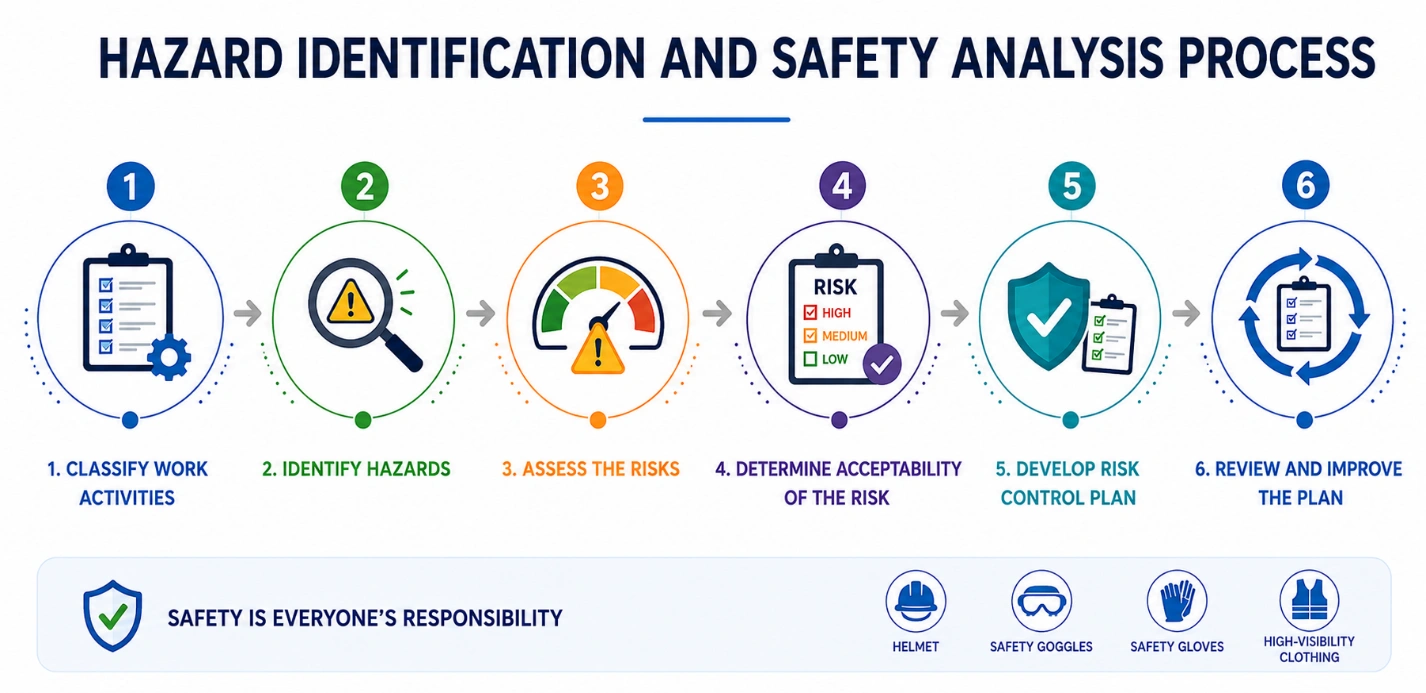
Hazard Identification and Safety Analysis
The Company systematically identifies hazards and assesses occupational health and safety risks to prevent accidents, work-related injuries and illnesses, property damage, and environmental impacts. The assessment covers work activities, tools, equipment, operational areas, and workplace conditions to ensure comprehensive risk management across all operations.
The Company's safety risk management process consists of the following key steps:
- Identify and classify work activities.
- Identify potential hazards.
- Assess risk levels.
- Determine acceptable risk levels.
- Develop and implement risk control measures.
- Review the effectiveness of risk control measures.
This process helps ensure that identified risks are effectively managed and maintained within acceptable levels in compliance with applicable legal requirements and relevant standards.
Safety Inspection
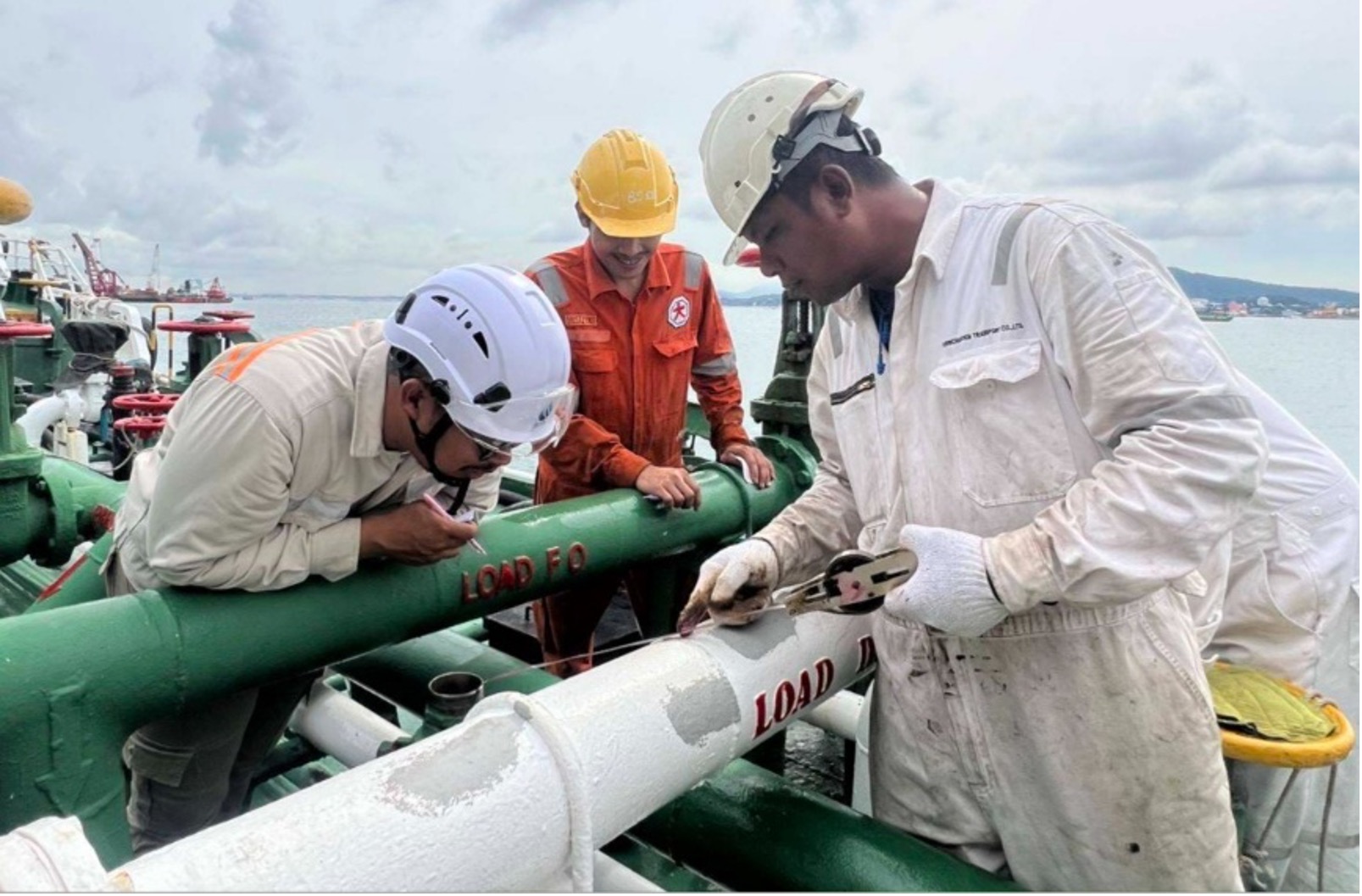
The Company conducts regular safety inspections across its operational areas, including office buildings, oil storage facilities, fire protection systems, emergency equipment, and other high-risk areas. These inspections are designed to identify and rectify unsafe conditions and unsafe behaviors before they result in accidents, injuries, or operational disruptions.
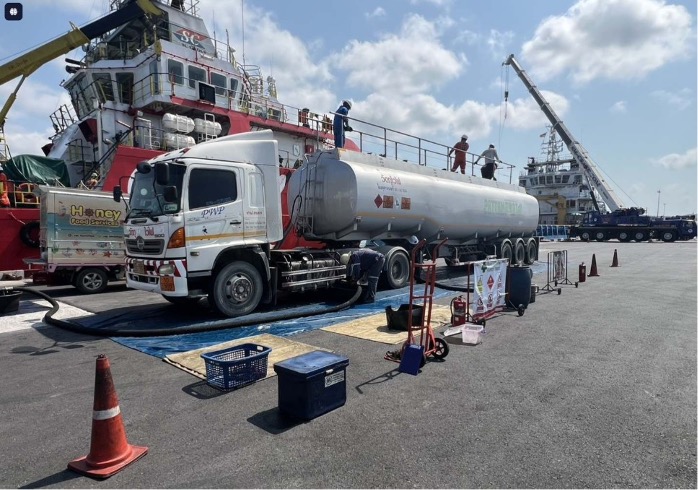
Oil Transportation Safety
The Company appoints dedicated Oil Delivery Inspectors to oversee transportation activities and ensure compliance with quality and safety standards throughout the delivery process. Regular inspections are conducted on transportation vehicles, vessels, and related equipment to verify their operational readiness and safety performance.
In addition, the Company has established preventive measures to minimize the risk of oil spills and maintains emergency response procedures to effectively manage incidents that may occur during transportation, thereby reducing potential impacts on people, property, communities, and the environment.
Emergency Preparedness and Response
The Company has established an Emergency Response Plan to address potential incidents that may arise from its business operations, including fires, oil and chemical spills, transportation-related accidents, and other events that may impact communities and the environment.
The Emergency Response Plan is regularly reviewed, updated, and tested through drills and simulation exercises to ensure that employees are prepared to respond effectively, promptly, and appropriately in emergency situations.
In 2025 lities.
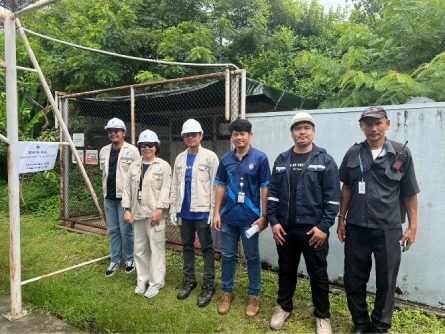
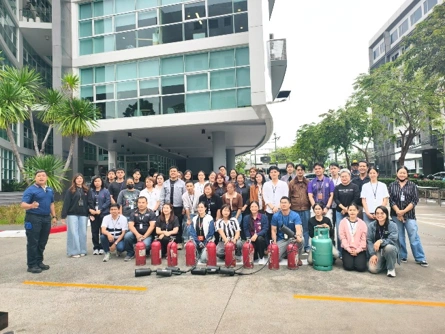
The Company promotes a strong safety culture through continuous training, communication, and awareness-building activities to ensure that employees possess the knowledge, understanding, and awareness necessary to perform their work safely and responsibly.
To strengthen emergency preparedness and response capabilities, all employees are required to complete Fire Fighting Training and Basic First Aid and Automated External Defibrillator (AED) Training. In addition, the Company conducts annual fire drills and evacuation exercises to test the effectiveness of its emergency response plans and enhance employee preparedness.
Fire Fighting Training
This training program is designed to enhance employees' knowledge and practical skills in fire prevention and initial fire suppression, including the proper use of fire-fighting equipment and appropriate actions during emergency situations. The program aims to improve workplace safety and minimize potential losses to life and property.
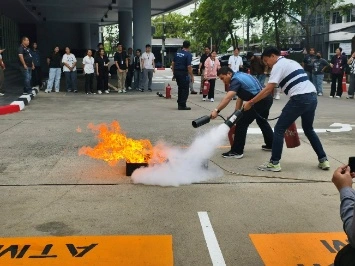
In 2025, the participation rate in Fire Fighting Training was 100% of employees
Basic First Aid and Automated External Defibrillator (AED) Training
This training program aims to develop employees' knowledge and skills in providing basic first aid to injured or ill individuals, as well as the proper use of an Automated External Defibrillator (AED). The training is intended to improve the likelihood of survival and reduce the severity of injuries before professional medical assistance becomes available.
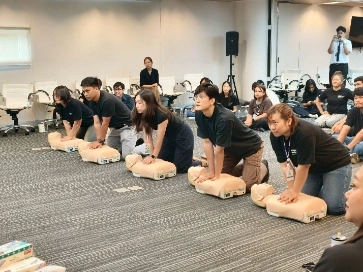
In 2025, the participation rate in Basic First Aid and Automated External Defibrillator (AED) Training was 100% of employees
SSHE Day 2025
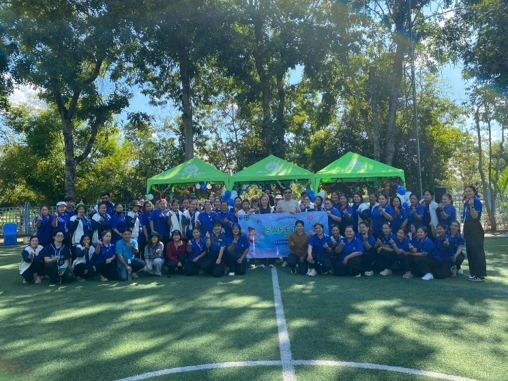
The Company organized SSHE Day 2025 to enhance employees' awareness and understanding of safety, occupational health, environmental management, and drug prevention, while fostering a strong safety culture and teamwork across the organization.
The activity was attended by 85 employees from Sea Oil Public Company Limited's Kamphaeng Phet Operations Office (S1 Project). Through a variety of learning and engagement activities, participants strengthened their knowledge and awareness of workplace safety, environmental responsibility, and drug prevention practices, enabling them to apply the knowledge effectively in their daily work.
In 2025, Total participants was 85 employees and Employees receiving safety, environmental, and drug prevention awareness communication was 100% of participants

The Company regularly monitors and evaluates the effectiveness of its safety, occupational health, and working environment management measures through safety inspections, annual risk assessments, emergency response drills, internal audits, and the monitoring of QSSHE performance indicators. Performance results are reported to management and the Audit and Risk Management Committee for review, oversight, and the identification of opportunities for continuous improvement.
In addition, the Company requires risk assessments to be reviewed whenever accidents, incidents, process changes, or findings from inspections and audits occur. This ensures that risk control measures remain appropriate, effective, and aligned with changing operational conditions and risk exposures.
Safety Performance Statistics
| Safety Performance Indicator | Targets 2025 | Performance in 2025 |
|---|---|---|
| Employee work-related fatalities | 0 | 0 |
| Contractor and third-party work-related fatalities | 0 | 0 |
| Employee Lost Time Injury Frequency Rate (LTIFR) | 0 | 0 |
| Contractor and third-party Lost Time Injury Frequency Rate (LTIFR) | 0 | 0 |
| Employee Recordable Injury Frequency Rate (RIFR) | 0 | 0 |
| Contractor and third-party Recordable Injury Frequency Rate (RIFR) | 0 | 0 |
| Total hours worked | > 4,000,000 | 4,606,915 |
The Company places great importance on the physical health, mental well-being, and overall quality of life of employees at all levels. The Company is committed to fostering a healthy workforce by promoting employee well-being, supporting safe and productive working conditions, and reducing the risk of work-related illnesses and health issues.
The Company requires all new employees to undergo a Pre-employment Health Check to assess their fitness for work prior to commencing employment. In addition, annual health examinations are provided for employees at all levels to support the early detection, prevention, monitoring, and management of health conditions, while encouraging preventive healthcare practices.
Furthermore, the Company regularly implements health promotion and well-being initiatives to enhance employees' quality of life. These include the Office Syndrome Prevention Program, which promotes ergonomically sound work practices and workplace health awareness, as well as exercise and wellness activities that encourage healthy lifestyles.
The Company also conducts Mental Health Programs to promote mental health awareness, stress management, and emotional well-being, while supporting employees in achieving a healthy work-life balance.
The Company believes that protecting and promoting employee health and well-being is a fundamental component of building a safe, productive, and sustainable organization that can grow and succeed together over the long term.